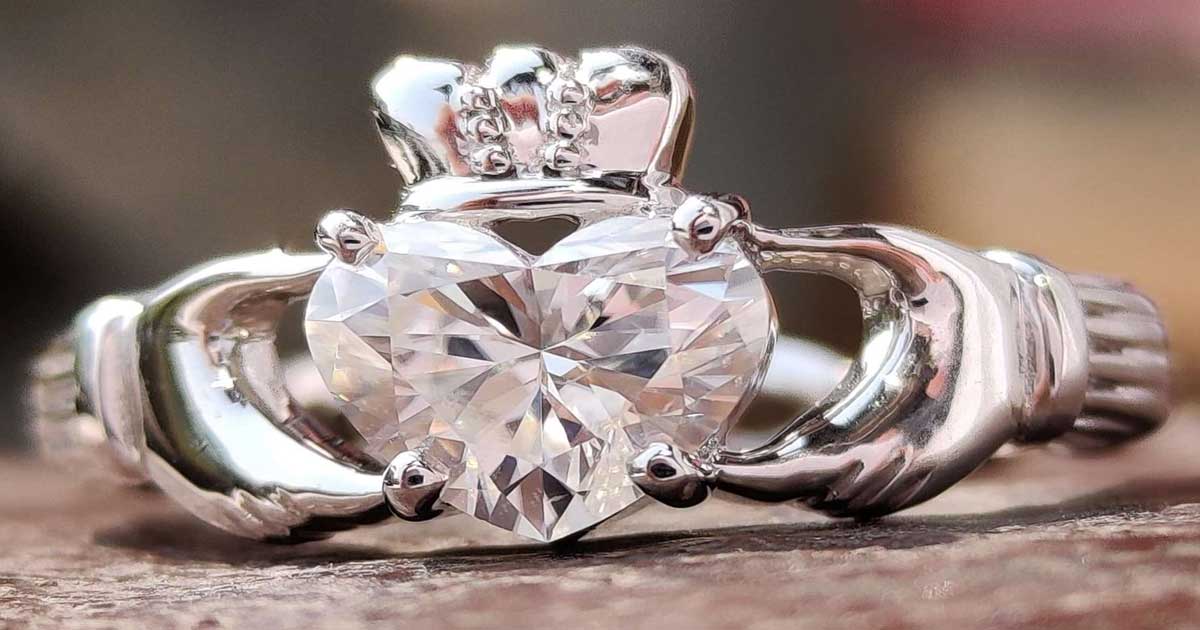
 Few rings carry meaning the way the Claddagh does. At a glance, it is easy to recognize. Two hands hold a heart beneath a crown. But that simple design has lasted for centuries because it says something people still care about. Friendship. Love. Loyalty. Those three ideas are built right into the ring, which is part of what keeps the Claddagh from ever feeling like just another piece of jewelry.
The Claddagh is one of the best-known symbols of Irish heritage, and for good reason. It is rooted in old Irish tradition and still feels personal today. Whether worn as a gift, a promise, a wedding ring, or simply as a connection to Irish identity, it carries more meaning than most jewelry ever does.
The Story Behind the Claddagh
 The Claddagh takes its name from the old fishing village of Claddagh near Galway. Its exact origin is still debated, but the design is generally traced back to seventeenth-century Ireland. Over time it became more than a local symbol. It turned into one of the most lasting expressions of Irish affection and loyalty.
The meaning is direct. The hands stand for friendship. The heart stands for love. The crown stands for loyalty. It is one of those rare designs where the symbolism is clear enough that people remember it, and strong enough that they keep passing it down.
How a Claddagh Ring Is Worn
Part of the ring’s appeal is that it carries its own quiet language. Worn on the right hand with the heart facing outward, it traditionally means the wearer is open to love. Turn the heart inward, and it means the heart belongs to someone already. On the left hand, especially with the heart turned inward, the ring often signals a deeper commitment, including marriage.
That tradition is part of what keeps the Claddagh alive. It is not just symbolic in design. It is symbolic in use.
Classic Styles and More Personal Variations
 Classic Claddagh rings in yellow gold or sterling silver still hold up well because the design is strong enough on its own. But modern versions add more variety without losing the original meaning. Two-tone gold styles help the heart stand out more clearly. Celtic details around the band add another layer of Irish character. Birthstone Claddagh rings bring a more personal touch, especially for gifts, birthdays, and family keepsakes.
That birthstone variation is a natural fit for the Claddagh. Since the heart already represents love, setting it with a stone tied to a birth month makes the ring feel even more individual. Some versions lean subtle. Others are brighter and more decorative. Either way, the symbolism stays intact.
Promise Rings, Wedding Rings, and Diamond Styles
 The Claddagh also works naturally in commitment jewelry. Promise rings, engagement styles, and wedding bands all build on the same core message. Diamond-accented versions add a little more formality while still keeping the design recognizable. Some rings stay close to the traditional form, while others reshape the crown or band to feel more contemporary.
That flexibility is part of the Claddagh’s strength. It can be simple and traditional, or dressed up for a milestone gift, and still feel like the same symbol people have trusted for generations.
A Ring That Still Means Something
The best Claddagh rings do more than look Irish. They hold onto the reason the design survived this long in the first place. It is a ring people wear with intention. Sometimes as a gift. Sometimes as a sign of commitment. Sometimes as a quiet link to family, place, or heritage.
That is what gives the Claddagh its staying power. It is easy to recognize, easy to wear, and still able to say something worth saying.